




Earnings Call Debriefs
Uncover Executive Priorities
Turn any company's latest earnings call into clear strategic direction, whether you're analyzing your own business, a competitor, a customer, or a prospect.

Executives are saying it. Your employees aren't getting it.
25%
NEVER EVEN
LISTEN
Some don't even try. In years of our sessions, ~25% say they've never listened to an earnings call. Miss it, and you skip the story before it starts.
Acumen Learning
A Transcript Tells You What Was Said. A Debrief Tells You Why It Matters.
An Earnings Call Debrief is a facilitated session where our experts deconstruct a company's most recent call through the 5 Business Drivers—Cash, Profit, Assets, Growth, and People—and translate it into executive priorities and a plan you can act on. Earnings calls are the clearest signal a company sends about its own priorities—but raw transcripts can be dense, jargon-heavy, and easy to misread. We turn them into direction.

For Sales Teams
Debrief a customer's or prospect's latest call, so reps stop pitching features and start solving what the CFO just named.
- Know what executives promised Wall Street
- Align your pitch to their stated strategy
- Reference real priorities from the call

For Leaders
Debrief your own company's call, so your team connects daily decisions to the results investors are watching.
- Understand what leadership told investors
- See how analysts are reading your results
- Cascade executive messaging across the org

For Follow-Through
Keep business acumen sharp after a course, with quarterly debriefs that turn training into an ongoing habit.
- Reorient to the tools learned in class
- Get the latest executive priorities each quarter
- Align the team to your most current results
Want to See One First? Every Month, We Do a Public Debrief, Free.
Since 2021, our senior consultants have hosted a free, public Earnings Call Debrief, breaking down a major company's latest call in real time, exactly the way we'd debrief one for your team. We've analyzed 60+ of the world's biggest companies across every major industry, from Microsoft and NVIDIA to Chevron, Walmart, Netflix, and Berkshire Hathaway. Same method, same 5 Business Drivers, same experts, open to anyone who wants to see a debrief in action.
60+ companies and counting
- Microsoft
- NVIDIA
- Chevron
- Walmart
- Netflix
- Berkshire Hathaway
- Salesforce
- Starbucks
- Boeing
- Disney
- John Deere
- Microsoft
- NVIDIA
- Chevron
- Walmart
- Netflix
- Berkshire Hathaway
- Salesforce
- Starbucks
- Boeing
- Disney
- John Deere
We Wrote the Book on Business Acumen (Literally).
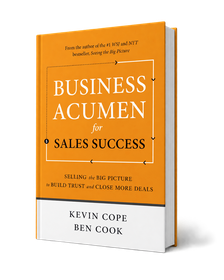
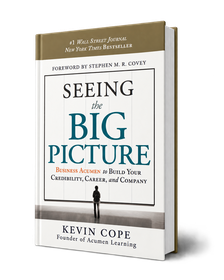
Acumen Learning is the sole-source provider of business acumen training based on the #1 Wall Street Journal and New York Times bestseller, Seeing the Big Picture. We don't just teach business acumen; we defined it.
The 5 Business Drivers®
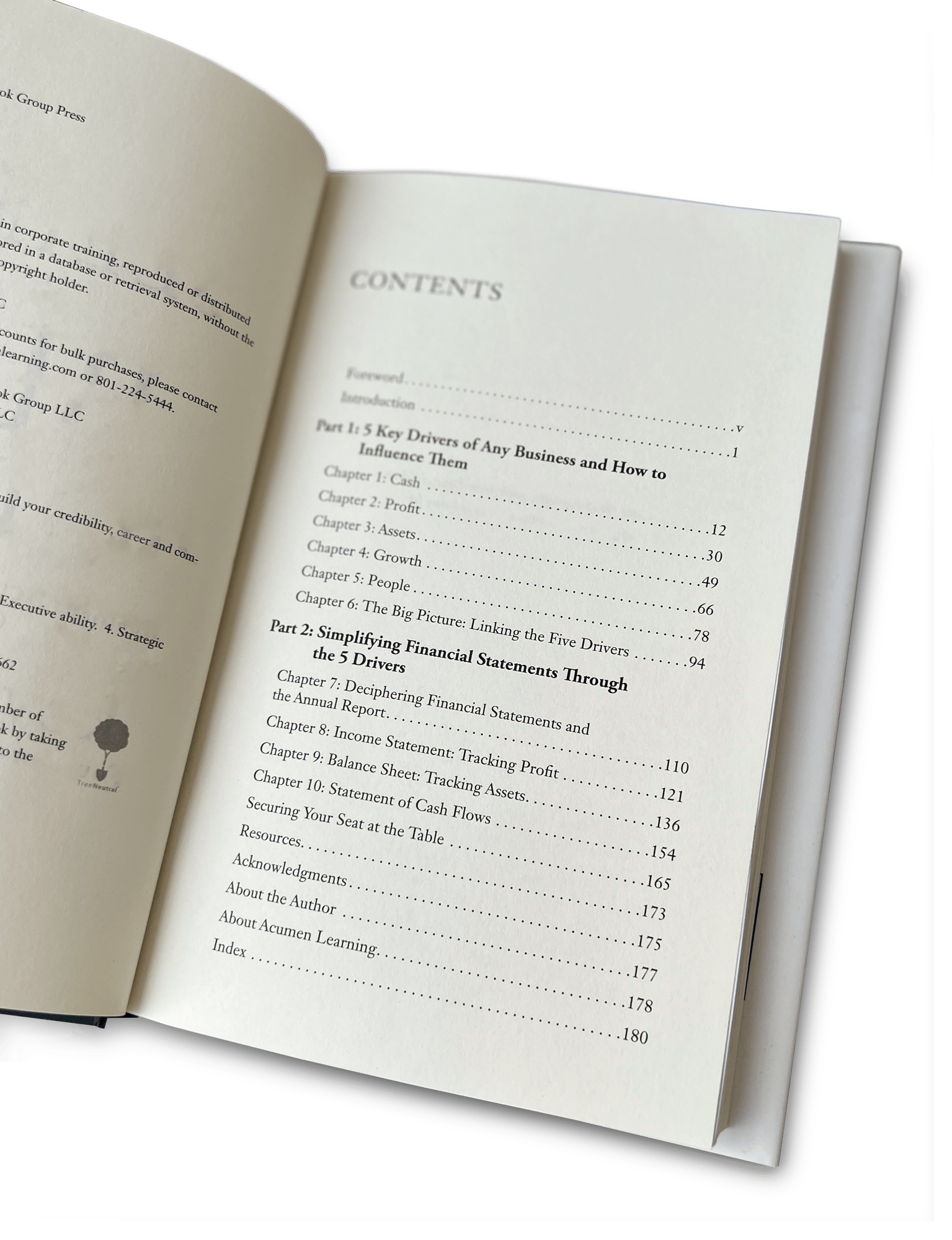
An earnings call is dense, fast, and full of jargon. Without a framework, most people don't know what to listen for. So we give your team one.
Every debrief runs on our proprietary 5 Business Drivers: Cash, Profit, Assets, Growth, and People. This simple, intuitive framework turns an hour of executive-speak into a clear picture of what leadership is actually prioritizing, why it matters, and what it means for the person listening.
Get your free copy of Seeing the Big Picture.
Available at no cost to leaders actively evaluating business acumen training for their teams.
Anyone Can Read the Transcript. We Tell You What to Do About It.
An earnings call is your company's voice to the owners and investors who bet on it — a quarterly signal of the priorities, pressures, and metrics leadership is actually making choices around. In this short video, we break down why listening matters, and what to listen for.
The payoff runs in both directions. Downward, you can translate executive messaging into direction your team understands, so they know why they're being asked to do what they're doing. Upward, you can frame your recommendations and business cases through the lens of what leadership is focused on right now — which is how you build financial credibility and get your ideas heard.
That's the skill our debriefs build, quarter after quarter.

The Results: From Dense Transcripts to Clear Direction
This was highly engaging because the case study was 'us'! Had reinforcement of things I knew, reminders of things I forgot, and learned a few new things.
This was outstanding and I only wish I had known about it sooner. It would've saved me a lot of hours of personal angst trying to build these skills on my own.
Amazing how such a complicated topic was explained in such a simple way.
Best presentation of firm financials, interpretation of performance, and connection to firm objectives.
I really enjoyed that we used real numbers from our company rather than high-level examples.
Frequently Asked Questions About Earnings Call Debriefs
What exactly is an Earnings Call Debrief?
An Earnings Call Debrief is a facilitated session where our experts break down a company's most recent earnings call through the 5 Business Drivers—Cash, Profit, Assets, Growth, and People—and translate the transcript into clear executive priorities and an action plan. Instead of a dense recap, your team leaves knowing what leadership actually prioritized, why it matters, and what to do about it in their role.
Is this standalone training, or a follow-up to your courses?
Both. A debrief works as training in its own right—your team doesn't need to have taken another Acumen course to get value from it. It's also the ideal follow-through for graduates of our courses: quarterly debriefs keep the 5 Business Drivers sharp, refresh the tools learned in class, and align your team to your most current results.
Whose earnings call do you debrief—ours, or our customers'?
Whichever serves your goal. For sales teams, we debrief your prospects' and customers' calls, so reps walk into executive meetings already fluent in what the buyer's leadership just told Wall Street. For leaders, we debrief your own company's call, so your team understands your results, your strategy, and how their decisions connect to the numbers investors are watching.
How is a debrief different from reading the transcript or using an AI summary?
A transcript tells you what was said; an AI summary shortens it. Neither tells you what it means for your business. Our debriefs are led by the people who wrote the book on business acumen, and they translate the call into strategic direction—mapping it to the 5 Business Drivers and to what your team should actually do differently. It's the difference between information and direction.
What does a debrief look like, and how long does it take?
Debriefs are typically delivered as focused virtual sessions timed to a company's quarterly earnings release. Your team joins, our facilitator deconstructs the call live through the 5 Business Drivers using our Executive Alignment and Navigating the Financials tools, and everyone leaves with the current strategic picture and a plan to act on.
Do we need to have taken another Acumen course first?
No. Debriefs stand on their own. That said, they're most powerful as a recurring rhythm for teams who've been through our training—each quarter builds on the last, turning classroom concepts into a habit your team practices all year.
Can't AI just summarize the earnings call for us?
It can, and it will do it in seconds. But a summary isn't strategy. AI can tell you what was said on the call; it can't tell you why it matters, which of those priorities actually move the business, or what any of it means for a specific person in a specific role. That last translation is the entire job, and it's the one thing a summary can't do.
The gap is business acumen. Point AI at an earnings call without it and you get a competent recap that everyone nods at and nobody acts on. Point it at the call with a framework — the 5 Business Drivers: Cash, Profit, Assets, Growth, and People — and the same transcript becomes a map of what leadership is prioritizing and where your team can have an impact. Our debriefs are led by the people who wrote the book on business acumen, and they don't stop at what was said. They surface what to do about it.
We're not anti-AI. We teach teams to use it well, and AI is woven throughout our business acumen training. But we're clear-eyed about the difference between information and direction. You can't prompt your way to a strategy.