





Consultative Selling and Business Acumen: Why "Trusted Advisor" Has to Be Earned, Not Claimed
Consultative Selling gave reps the advisor posture. Business acumen gives them something worth advising on.
What Consultative Selling Actually Teaches
Consultative Selling emerged in the 1970s as a reaction against high-pressure, transaction-first sales tactics, and it's held up less as a rigid step-by-step process than as a philosophy that's been absorbed, in one form or another, into nearly every modern methodology since. The core idea: position the rep as an advisor rather than a vendor, prioritize genuinely understanding the buyer's needs over pushing a predetermined pitch, and build enough trust that the eventual recommendation lands as guidance rather than a sales tactic.
In practice, that means reps are trained to ask real, open-ended questions and actually listen to the answers, resist the urge to jump to a pitch the moment an opening appears, and treat the relationship as something worth investing in beyond a single transaction. A consultative rep's value proposition isn't "I have the best product," it's "I understand your situation well enough that you should trust what I'm about to tell you."
Done well, this is a genuinely different experience for a buyer, one where the questions feel like real curiosity instead of a discovery-call checklist, and where the eventual recommendation feels earned. It's part of why the consultative posture became such a durable default across B2B sales, most other named methodologies still assume some baseline of it underneath their own specific mechanics.
Where the Model Runs Into Its Own Ceiling
The risk with Consultative Selling is that the advisor posture is, at its core, a posture, and postures can be performed without much substance underneath them. A rep can ask thoughtful open-ended questions, nod along attentively, reflect the buyer's own words back convincingly, and still have nothing genuinely useful to offer once the buyer finishes talking. Active listening proves a rep is paying attention. It doesn't, by itself, prove they understand the business well enough to add real value to what they just heard.
This is where "trusted advisor" often quietly becomes aspirational rather than actual. A buyer can walk away from a genuinely pleasant, attentive conversation and still not have gained anything they couldn't have arrived at on their own, because the rep's contribution was empathy and reflection rather than insight. Buyers, especially experienced executive buyers, tend to notice the difference eventually, even if it takes a call or two to surface.
Where Business Acumen Fills the Gap
This is where business acumen makes the advisor role real instead of aspirational. A rep who understands how businesses actually generate cash, protect margin, and fund growth has something genuine to contribute once the listening is done, a perspective the buyer didn't already have, rather than just a well-reflected version of what the buyer said themselves.
Take a concrete example. A Consultative Selling rep meeting with a mid-market manufacturer listens carefully and hears the buyer describe wanting to "modernize operations," a phrase vague enough to mean almost anything. A rep working from listening skills alone reflects that back, asks a few clarifying questions, and moves toward whatever solution loosely fits "modernization." A business-acumen-fluent rep, understanding that mid-market manufacturers are frequently squeezed between rising input costs on one side and pricing pressure from larger, better-capitalized competitors on the other, recognizes that "modernize operations" is very likely really about protecting margin under exactly that kind of pressure, and reframes the conversation around margin protection specifically, a perspective the buyer hadn't fully articulated but immediately recognizes as accurate.
To be clear, this isn't about a rep overriding a buyer's own account of their needs with an outside agenda, that would undermine the entire consultative premise. It's about having enough strategic grounding, some real sense of the pressures common to that industry and company stage, to genuinely add value once the listening is done, rather than just demonstrating that listening happened. That's real financial and strategic substance, the kind CPAs earn CPE credit for, made usable without an accounting background, and it's exactly what turns a good listener into a real advisor.
Turning This Into Practice
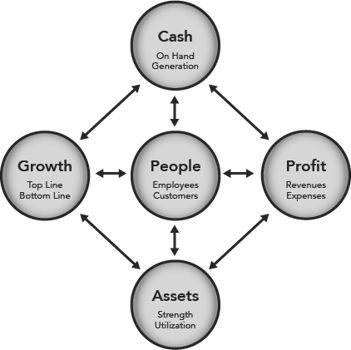
All of this sits on top of one underlying model: the 5 Business Drivers, cash, profit, assets, growth, and people. It's a principle-based way of understanding what any business is trying to accomplish and where its real challenges are. It's the same framework whether a rep is running a consultative approach, Challenger, Sandler, SPIN, MEDDIC, Solution Selling, or a homegrown methodology, because it gives reps something real to offer once they've done the listening a consultative approach requires.
So if you're running a consultative approach and want your team advising with real strategic fluency instead of well-reflected listening alone, there are two ways to build that.
Acumen Intelligence™
For reps who need that homework done fast, Acumen Intelligence builds an account-specific briefing before the call, doing in minutes what would otherwise take hours of research, so the insight walking into the room is grounded in that company's actual situation.
Full Account Analysis
Enter a public company and get executive priorities, financial signals, and strategic focus areas—mapped to the 5 Business Drivers.
Read or Listen to the Call
Go straight to the source with thousands of earnings call transcripts and recordings—read the moment or hear it in the executive's own words.
AI Sales Co-Pilot
Chat with a co-pilot trained on our methodology to shape talking points, pressure-test your case, and walk into the next call ready.
Corporate Sales Training
Get your team trained. Acumen Learning's corporate training programs teach the 5 Business Drivers directly and give reps live practice applying them, building the fluency to do that homework well on any account, without starting from zero every time.
Tool-Agnostic Prompting
Reps learn prompts that work with Claude, ChatGPT, Copilot, Gemini, or whatever's in your tech stack—these skill travels with the rep.
Grounded in the 5 Business Drivers
Every search maps to Cash, Profit, Assets, Growth, and People—so the output speaks the language the C-suite actually measures.
From Research to Talk Track
Reps turn financial findings into an executive-ready business case and talking points—not just a pile of data they don't know how to use.
Becoming the Advisor You Claim to Be
(Consultative Selling asks reps to earn trust. Iannarino explains what earning it actually requires.)
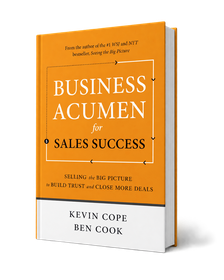
Acumen Learning wrote the book that gives the consultative posture something real behind it, and Anthony Iannarino, author of The Only Sales Guide You'll Ever Need and The Lost Art of Closing, agrees, calling it a framework that helps sellers "move beyond product pitches and become the trusted advisor your clients actually need." It's earned the same endorsements from top leaders sellers already trust: Matt Dixon, Jeb Blount, Jill Konrath, and Stephen M.R. Covey.
Salespeople who create value win. The ability to tie your solution to real business drivers isn't optional, it's a discipline. Business Acumen for Sales Success gives you the framework to move beyond product pitches and become the trusted advisor your clients actually need.
— Anthony Iannarino
Author of The Only Sales Guide You'll Ever Need and The Lost Art of Closing
Want a copy?

Frequently Asked Questions About Consultative Selling and Business Acumen
Do I need a finance background to use business acumen with a consultative approach?
No. Business acumen is a strategic fluency, not an accounting skill. It gives reps something genuinely useful to offer once the listening is done, without needing to analyze financial statements.
Does business acumen replace Consultative Selling, or work alongside it?
Alongside it. Consultative Selling provides the advisor posture, real listening, real curiosity, real patience. Business acumen provides the substance that makes that posture credible instead of performative, so the eventual recommendation is genuinely earned.
How much preparation does this actually take before a call?
More than none, less than a full financial analysis. Understanding the pressures common to a company's industry and stage takes some real homework beforehand. Acumen Intelligence is built specifically to compress that homework from hours to minutes.
What's the fastest way to get my team doing this well?
Three starting points, depending on how deep you want to go: read Business Acumen for Sales Success to learn the 5 Business Drivers framework, enroll your team in Acumen Learning's corporate training for hands-on fluency, or use Acumen Intelligence to generate account-specific briefings before every call.
Is this only for reps who already use a consultative approach?
No. The 5 Business Drivers is the same underlying framework regardless of methodology, Challenger, Sandler, SPIN, MEDDIC, Solution Selling, or none at all. This page focuses on Consultative Selling specifically because the advisor relationship makes the connection especially direct, but the training and tools apply to any sales approach.